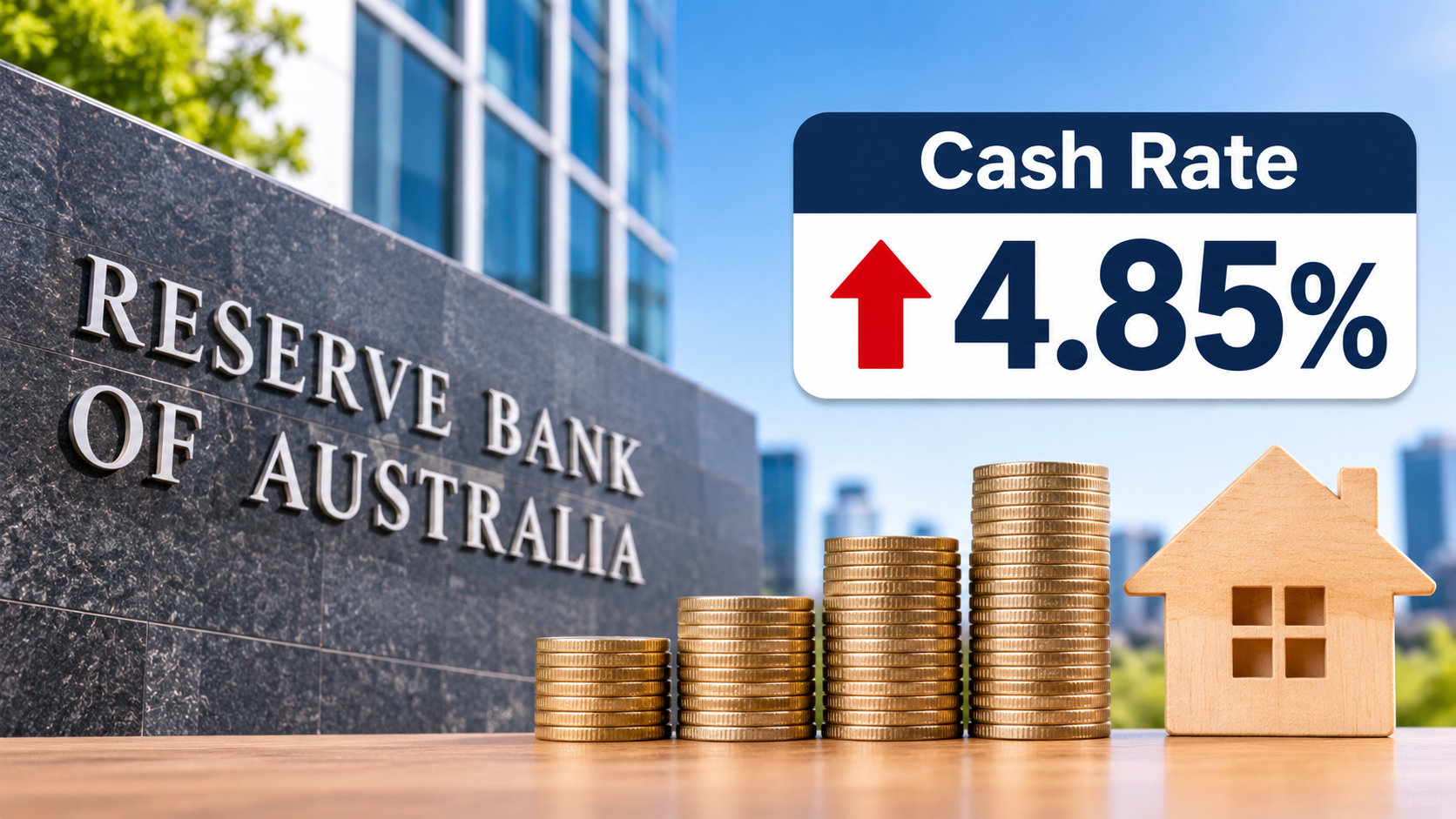
The Reserve Bank of Australia (RBA) has increased the official cash rate by 0.25 percentage points to 4.85%, marking its fifth interest rate increase in 2026. The decision, announced on 3 November, takes Australia’s benchmark interest rate to its highest level in 18 years, adding further pressure on households and businesses already dealing with rising living costs.
The RBA’s Monetary Policy Board voted six to three in favour of the increase, highlighting ongoing concerns about persistent inflation and the possibility that price pressures could remain elevated for longer than previously anticipated.
Inflation Remains a Major Concern for the RBA
The latest rate increase reflects growing concerns about Australia’s inflation outlook. Higher global fuel and commodity prices, partly driven by the continuing conflict in the Middle East, have contributed to rising costs across several sectors.
Domestic economic conditions have also played a role. The RBA believes capacity pressures remain stronger than previously estimated, while businesses continue to experience higher operating expenses. Increasing costs are gradually being passed on to consumers through higher prices for goods and services.
The central bank has warned that inflation could remain above its 2% to 3% target range for much of 2027. Its latest forecasts suggest inflation may not return to the upper end of the target range until late 2027.
The RBA is particularly concerned that prolonged inflation could influence consumer and business expectations, making it more difficult to bring price growth under control.
Higher Interest Rates Add Pressure on Mortgage Holders
The latest increase is expected to create additional financial pressure for Australians with variable-rate home loans.
When the RBA increases the official cash rate, banks and other lenders may adjust their mortgage interest rates. This can result in higher monthly repayments for borrowers, depending on how individual lenders respond.
For households already managing increased expenses for groceries, electricity, fuel and housing, another rise in borrowing costs could further restrict disposable income.
Higher interest rates may also affect prospective homebuyers, as increased mortgage repayments can reduce borrowing capacity and make property purchases less affordable.
The housing market has already shown signs of slowing, with the RBA acknowledging that previous rate increases have contributed to weaker housing activity and declining property prices.
Economic Growth and Employment Outlook
While controlling inflation remains the central bank’s priority, the RBA also faces the challenge of maintaining economic stability.
Previous interest rate increases have started to slow economic activity. The central bank has noted softer housing conditions, weaker demand and signs of increasing pressure in the labour market.
Employment is still expected to grow, although the unemployment rate is forecast to rise more than previously anticipated.
The RBA expects economic growth to moderate further over the coming year. Slower demand could help reduce inflationary pressure by limiting the ability of businesses to continue increasing prices.
However, policymakers must balance the need to control inflation against the risk that higher borrowing costs could place excessive pressure on households and businesses.
Businesses Face Higher Financing and Operating Costs
The ongoing rate increases are not limited to the residential property market. Businesses that depend on external financing may also face higher borrowing expenses.
Small and medium-sized businesses, particularly those operating with tight cash flow margins, could experience increased pressure when refinancing existing facilities or securing funding for expansion.
Higher financing costs may influence business investment, hiring decisions and future growth plans. Companies may also need to reconsider operating budgets as rising energy, transport and supplier costs affect profitability.
For commercial property investors and businesses planning major investments, the higher interest rate environment makes careful cash flow management and financing assessments increasingly important.
What Happens Next?
The RBA has indicated that future monetary policy decisions will depend on incoming economic data, particularly inflation trends, employment conditions and broader economic activity.
Although the November increase reflects the central bank’s determination to bring inflation under control, further changes to the cash rate will depend on whether inflation begins to ease sustainably.
Economists and financial market participants will continue monitoring economic indicators for signs of whether the current tightening cycle has reached its peak.
For Australian households and businesses, the latest decision reinforces the importance of reviewing borrowing commitments, managing existing debt and assessing financial arrangements in an environment of elevated interest rates.
With inflation expected to remain above target for an extended period, interest rate movements will continue to be a significant factor influencing Australia’s economic outlook throughout 2027